
Thinking About Evolution in a Human-Shaped World
What a Crow In the City Taught Me About Adaptation and Teleology

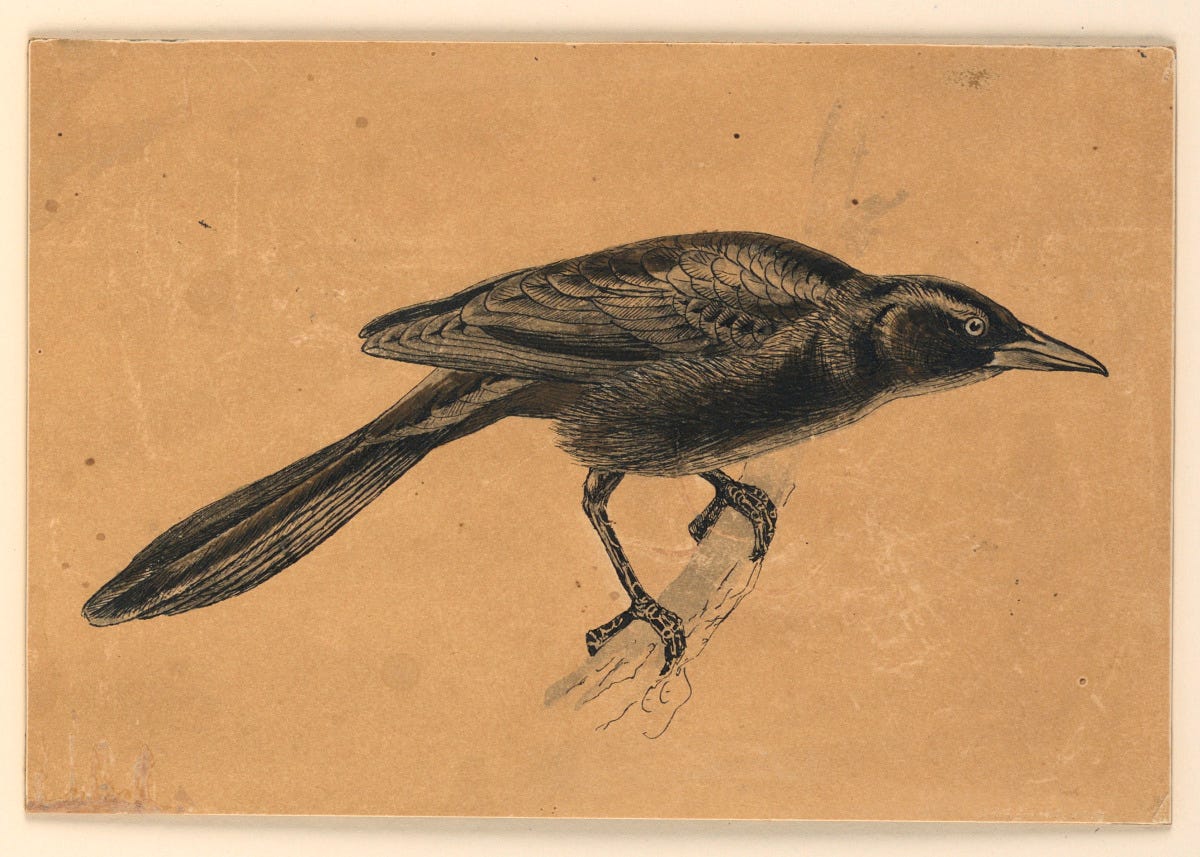
Making observations in nature is one of my favorite pastimes. However, recently these experiences have become so routine that at times I forget to really consider what I am looking at. To counter act this, I’ve been trying to be more intentional in my observations. To my excitement, this practice has fostered a new sense of curiosity within me.
I am beginning to view the natural world through a renewed ecological lens. Entering my most recent intentional observation period, I chose to focus explicitly on the future. I have become increasingly interested in how current ecological dynamics—species interactions, environmental change, and evolutionary processes—may shape future conditions, and I aim to consider what informed projections can be drawn from present patterns.
As someone with a particular fondness for birds, I found my eyes wandering into the treetops and sky above. What I saw was no surprise to me. It was all things that I have seen many times before, small house sparrows (Passer domesticus) gliding between branches, and barn swallows (Hirundo rustica) flying high overhead, looking for the barns they will never find. I then focused my gaze on an ever-common American Crow (Corvus brachyrhynchos). This particular bird had its entire head inside of a public trash can. I watched it as it meticulously picked through each individual piece of trash.
This wasn’t the first time I have witnessed this event. I have become more and more aware through literature and personal observation that members of the Corvus family are particularly smart and have well-developed problem-solving abilities—all of which makes them great urban dwellers. As I watched this bird pick through the trash, I was increasingly fascinated by the use of its beak. The beak seemed to serve more as an appendage to move, pick up, slide, and even throw things rather than for striking, piercing, or breaking—all things we usually associate with beaks. This realization got me thinking about the possible selective pressures that urban dwelling species will experience.
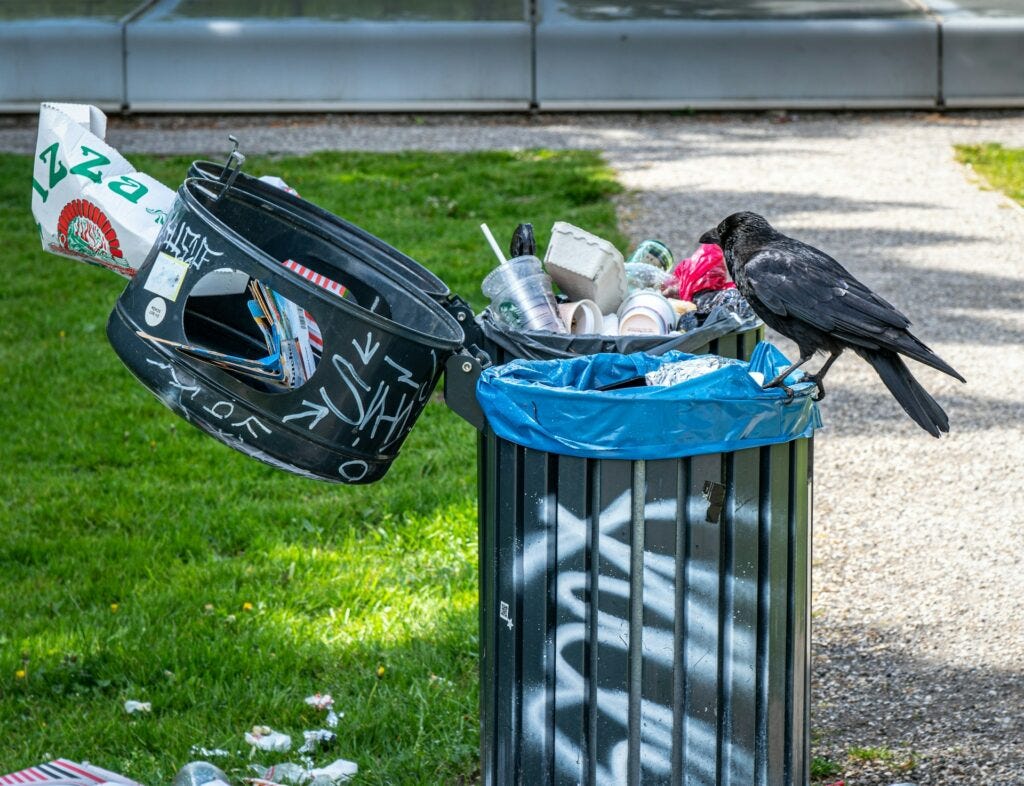
My thoughts wandered through the various possibilities of what the beak might evolve into someday, and how selective pressures and the plethora of mutations could lead to such changes. I imagined a beak that was blunt, almost like teeth that could scoop and chomp. I also imagined beaks that were long and pointed—maybe something similar to chopsticks. I could picture each one being used by these smart crows as they pick through human waste. Their problem-solving skills would only be amplified by these characteristics. I know this way of thinking can be fraught with oversimplifications and an unrealistic timeline, but it was fascinating. I couldn’t help myself.
At the same time, I recognize the dangers of teleological thinking—the tendency to assume that evolution is working toward a goal, an improvement, or a predetermined outcome. Natural selection does not plan ahead, strive for progress, or design organisms for future conditions. Traits persist simply because they happen to work well enough in a given environment at a given time. When we frame evolution as purposeful or directional, we risk misunderstanding both the randomness and the contingency that shape biological change. That is not to say that we are unable to imagine what pressures species will face in the future.
Human-caused environmental change now extends far beyond the boundaries of any single city park. Indeed, it is difficult to identify a place on Earth that has not been altered, directly or indirectly, by human activity. This realization is deeply unsettling. Yet it also creates an unprecedented opportunity to observe evolutionary and ecological processes unfolding in real time, as populations respond to novel selective pressures across landscapes shaped by our species.
We cannot predict with certainty which traits will be favored in the future. What seems clear, however, is that the direction of selection will be profoundly influenced by the environments humans have constructed and transformed. This brief experience reminded me that life persists under remarkable constraints. The natural world is resilient, dynamic, and continuously adapting. It leaves me wondering not only what traits will emerge, but how organisms will continue to navigate and reshape the altered worlds we have made.
Sapere Aude—dare to know—the world holds its answers; we need only be brave enough to ask.
imagining possible futures while acknowledging evolution’s unpredictability. How poetic! We are constantly influencing the selective pressures in our environments and watching adaptation in real time.
Excellent job! A very important understanding about evolution…🙂👍